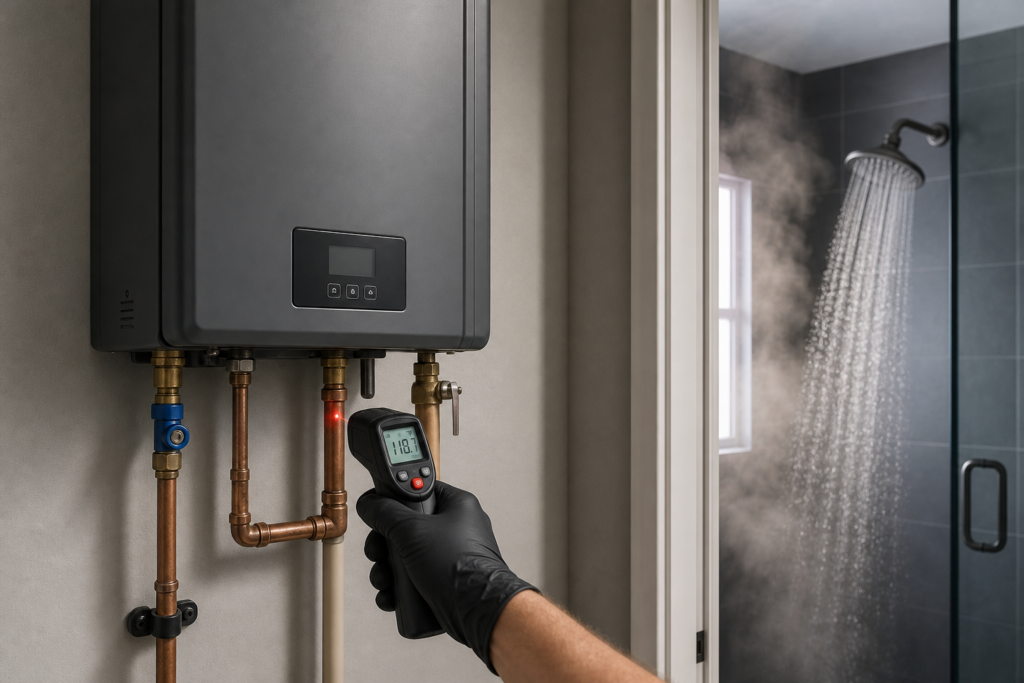




A tankless water heater can start a shower hot and then turn cold when the water flow drops below the unit’s activation requirement, demand elsewhere in the home exceeds its heating capacity, or the system interrupts heating because of a restriction or fault. Scale, a clogged inlet screen, a shower mixing problem, an error condition, or a fuel, vent, sensor, or plumbing-crossover issue can create similar symptoms.
The timing matters more than the cold water alone. A brief cool change after someone opens another fixture points in a different direction than a unit that shuts down at the same point every shower. The safest first step is to record the pattern, check the unit’s visible display, and avoid opening or adjusting the appliance.
Start With the Exact Temperature Pattern
Notice what happens immediately before the water turns cold. Useful details include:
- Whether the shower begins fully hot or never reaches the normal temperature.
- How many minutes pass before the change.
- Whether the water becomes completely cold, turns lukewarm, or alternates between temperatures.
- Whether the temperature returns on its own.
- Whether another shower, faucet, dishwasher, or washing machine was using hot water.
- Whether the same problem occurs at a sink with a steady hot-water flow.
- Whether the tankless display shows an error code or stops indicating burner operation.
A repeatable pattern helps separate a shower-fixture issue from a whole-home hot-water problem. If only one shower is affected while other hot taps remain steady, the shower valve, cartridge, pressure-balancing mechanism, or low-flow fixture deserves attention. If every hot fixture changes temperature together, the tankless unit, supply, or shared plumbing becomes more likely.
Low Flow Can Make the Burner Stop and Restart
Tankless water heaters begin heating only after they detect enough water moving through the unit. Each model has its own minimum activation and operating flow. A shower that reduces flow too far may cause the burner or heating elements to stop, allowing cold water to pass until the unit detects sufficient flow again.
That pattern can appear when a low-flow showerhead is partly restricted, a shower cartridge is mixing in more cold water, or someone turns the handle toward a setting that asks the heater for very little hot water. The result may feel like alternating hot and cold water even though the tankless unit is responding to changing flow.
Do not remove a flow restrictor or raise the heater temperature as a diagnostic shortcut. Higher temperatures increase scald risk, and changing the showerhead will not resolve a faulty cartridge, restricted supply, or appliance problem. A plumber can compare fixture flow with the unit’s model requirements and determine whether the symptom starts at the shower or the heater.
Simultaneous Demand May Exceed the Unit’s Capacity
A tankless system does not run out of stored hot water, but it can only raise a certain amount of water to the requested temperature at one time. That capacity depends on the unit, incoming-water temperature, fuel or electrical input, and the temperature setting.
If another shower, dishwasher, clothes washer, or hot faucet starts while you are bathing, total demand may move beyond the unit’s rated output. Some systems reduce the delivered temperature or flow under that load. Others may expose an installation, gas-supply, or control problem that is not noticeable when only one fixture operates.
Try to note whether the cold change coincides with another appliance or fixture. Do not repeatedly overload the system to reproduce the problem. A technician can measure actual flow and temperature rise, compare them with the model’s specifications, and determine whether the unit is undersized, improperly supplied, or simply being asked to serve more fixtures than planned.
Homeowners comparing system capacity can also review tankless versus traditional water heaters before discussing a replacement. A cold interval does not by itself mean the existing unit is too small or needs to be replaced.
Scale and Inlet Restrictions Can Reduce Performance
Minerals can accumulate inside a tankless heat exchanger over time. Debris can also collect at the cold-water inlet screen. Either condition may restrict water movement, interfere with heat transfer, or contribute to unstable operation. The exact effect depends on the equipment and the condition of the water supply.
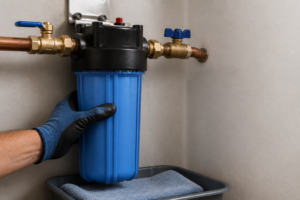
Maintenance history is useful evidence. Tell the technician when the unit was last serviced or descaled, whether the home has filtration or softening equipment, and whether the problem developed gradually. A visible service reminder or error code should be recorded exactly as displayed.
Tankless flushing and inlet-screen service must follow the manufacturer’s procedure. The unit may involve electricity, fuel gas, hot water, chemicals, isolation valves, and model-specific restart steps. Do not remove the cabinet, disconnect piping, or circulate a cleaning solution unless you have the correct training and equipment. Professional tankless water heater service can verify whether maintenance is due and whether a restriction actually explains the symptom.
A Shower Valve or Plumbing Crossover Can Mimic Heater Trouble
Cold water can sometimes enter the hot-water side through a worn mixing valve, a failed shower cartridge, or an improper connection between hot and cold piping. This is called crossover. It can lower the temperature at one fixture or affect several fixtures, depending on where the connection occurs.
A pressure-balancing shower valve can also change the hot-to-cold mix when someone uses water elsewhere in the home. That protective response is meant to reduce sudden temperature shifts, but a worn cartridge or pressure change may make the shower noticeably cooler.
These conditions can resemble a tankless shutdown even when the heater continues operating. A plumber can compare hot-water temperature at multiple fixtures, isolate the shower valve when appropriate, and check whether cold water is moving into the hot side. Replacing heater parts before testing the plumbing would not correct a crossover problem.
Error Codes and Safety Interruptions Need Proper Diagnosis
Modern tankless units monitor water flow, temperature, ignition, combustion, exhaust, and other operating conditions. When the controls detect a problem, the unit may stop heating and display a code. The code narrows the diagnostic path, but it does not always identify the failed part by itself.
Possible categories include a dirty sensor, interrupted ignition, inadequate fuel supply, blocked air intake or exhaust, overheating, condensate trouble, or an internal control fault. The relevant checks vary by model and fuel type. Resetting a unit repeatedly can erase useful timing information or keep an unsafe condition in service.
Write down or photograph the displayed code, but keep the appliance closed. Do not adjust gas pressure, alter venting, bypass a safety, open an electrical panel, or disassemble the burner. If you smell fuel gas, suspect an exhaust problem, see water reaching electrical components, or hear a carbon-monoxide alarm, leave the affected area and follow the emergency guidance from the utility or emergency services. Do not keep operating the heater while those conditions are present.
Safe Checks Before Scheduling Service
Several observations can help without opening the heater:
- Confirm whether one fixture or every hot-water fixture is affected.
- Note the shower handle position and whether the symptom changes at a steady, comfortable flow.
- Record whether another water-using appliance starts at the same time.
- Photograph any error code or service indicator on the visible display.
- Check for visible water around the unit without touching wet electrical equipment.
- Note unusual sounds, odors, or recent plumbing and appliance work.
- Find the model number from an exterior label only if it is safely visible.
Avoid rapid on-and-off testing, changing the temperature to an unsafe setting, or using several fixtures to force a failure. The goal is to describe normal-use conditions, not stress the system.
What a Tankless Service Visit May Include
A technician may begin by reproducing the symptom under controlled fixture flow and comparing inlet and outlet temperatures. The evaluation can include checking visible error history, measuring flow, reviewing the temperature setting, verifying the shower valve, and comparing simultaneous demand with the unit’s rated capacity.
When the condition points back to the appliance, model-appropriate testing may include water pressure and inlet restriction, heat-exchanger condition, sensor readings, electrical supply, fuel delivery, combustion, venting, condensate drainage, and control operation. Not every system requires every test. The observations should lead the diagnosis.
The findings may support routine maintenance, a fixture repair, correction of a supply or vent condition, replacement of a verified failed component, or a larger water heater repair or replacement discussion. A recommendation should explain what was measured, what failed, and why the proposed work matches the symptom.
When to Call for Tankless Water Heater Repair in Alabaster
Schedule service when the temperature loss repeats during ordinary use, affects multiple fixtures, appears with an error code, or continues after simultaneous household demand is ruled out. Prompt evaluation is also sensible when hot-water performance has gradually declined, maintenance history is unknown, or the unit is leaking.
Streamline Plumbing & Drain provides tankless water-heater diagnosis and service in Alabaster. Share the timing, affected fixtures, visible codes, and any safe observations you recorded so the technician can begin with the conditions you are actually experiencing.
Get a Clear Answer Before Replacing Parts
If your tankless water heater starts hot and turns cold during a shower, contact Streamline Plumbing & Drain. A condition-based inspection can distinguish flow and fixture behavior from scale, supply, venting, sensor, or control problems before a repair or replacement is recommended.