



Compare underground sewer repair quotes by the work they cover before comparing their totals. The inspected pipe condition, repair endpoints, access, connections, restoration, and exclusions should be clear. Two proposals can both say sewer repair while addressing different pipe sections and leaving different tasks for the homeowner.
Start with a shared understanding of the problem. Ask each contractor to explain what was inspected, what remains uncertain, and why the proposed work addresses the findings. A larger replacement is not automatically better, and a smaller repair is not automatically sufficient.
Check That Both Quotes Describe the Same Project
Put the proposals side by side and look for these seven items. If one is missing, request clarification before treating the totals as comparable:
- The findings supporting the repair and any limits of the inspection.
- The starting and ending connections of the pipe section included.
- The proposed repair or replacement method and the reason for it.
- The access areas, route, and surfaces likely to be affected.
- The branches, cleanouts, or other connections included in the work.
- The backfill, cleanup, and finished-surface restoration responsibilities.
- The exclusions, completion checks, and process for approving scope changes.
Ask for locations you can recognize, a sketch, or a walk-through at the property. You should be able to understand which part of the system each contractor intends to repair without having to interpret pipe terminology on your own.
Ask What the Inspection Actually Established
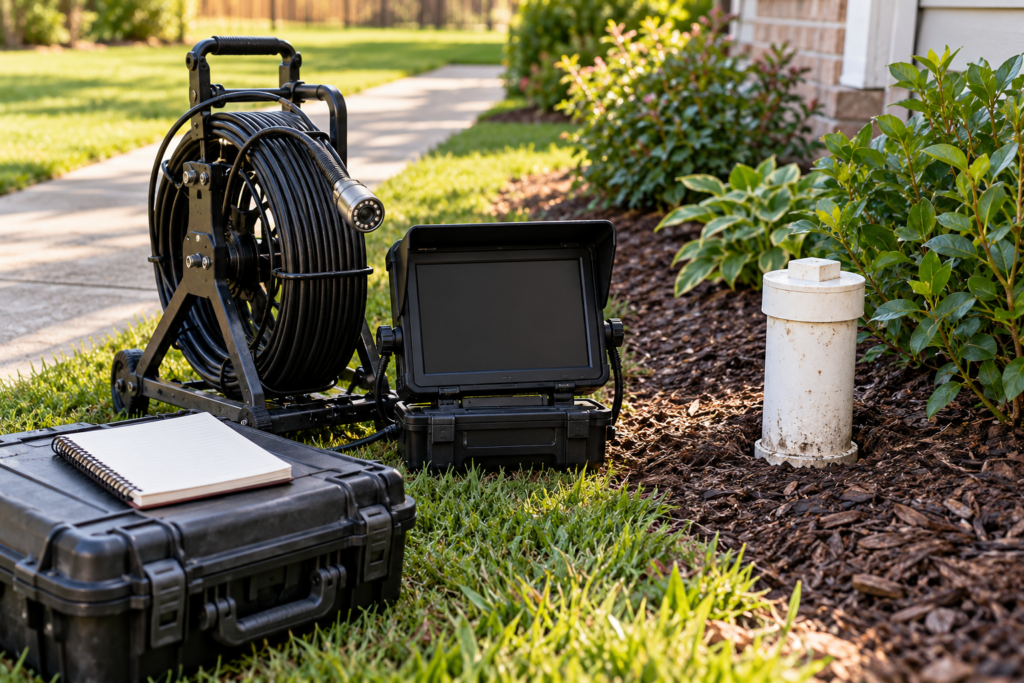
A sewer camera inspection can show visible conditions inside the inspected run. Ask to have the relevant findings explained and connected to the proposed repair. A recording should help the discussion rather than replace an explanation of what the contractor observed.
Clarify whether the camera reached the intended endpoint and whether standing water, debris, a blockage, or another condition limited the view. An uninspected section is an uncertainty, not proof that it is sound or damaged.
Ask how the pipe route and work location will be confirmed when access is planned. The camera view alone does not describe every surface condition or other buried system. Have the quote explain any additional locating or evaluation included before work starts.
Compare Repair Endpoints Before Comparing Methods
A spot repair addresses a defined section. A broader replacement covers more of the run. Ask exactly where each proposal begins and ends, which existing sections will remain, and what findings support that extent.
For a larger proposal, ask why work on the additional pipe is recommended. For a smaller one, ask what is known about the remaining run and what the repair is expected to address. Both questions help distinguish a scope difference from a simple price difference.
Streamline Plumbing & Drain offers sewer line repair and replacement in Alabaster. Discuss the appropriate scope for the evaluated pipe instead of selecting a method from a label alone.
If different methods are proposed, ask how the pipe condition, route, connections, and access support each recommendation. A description such as trenchless does not establish that there will be no openings or surface work. Have the contractor identify the access areas that still apply.
Identify the Connections Included
A repair quote should explain the connections at the new section’s endpoints. Also ask whether any branch connections, cleanouts, or other relevant parts are included, changed, retained, or excluded.
Where the planned work reaches a connection with unclear ownership or responsibility, ask who will confirm the boundary and arrange the required coordination. Do not infer the contractor’s authority to work on a connection from its location alone.
If a new cleanout or another component is proposed, ask why it is needed and where it will be installed. Have those items identified in the accepted scope so that an equipment or access assumption does not become a surprise during the project.
Compare Access and Surface Restoration
Ask where the work area will be and how equipment will reach it. Describe known irrigation, lighting, fences, planting, and other private features nearby. Clarify what locating, protection, and coordination are included for those features.
Backfill, hauling debris, and returning the lawn or paving to a finished condition are different tasks. Have the proposal specify which apply. If sod, grading, concrete, or other restoration is excluded, ask what condition the contractor plans to leave for the next trade.
Ask about the limits of matching an existing surface. New concrete, paving, or lawn material may differ from an aged surface. The scope should describe the intended replacement area and finish, together with any work you need to arrange separately.
Clarify Checks, Inspections, and Documentation
Ask how the contractor will confirm completion of the actual repair. The appropriate checks depend on the work. Have the proposal explain any testing, inspection coordination, or final camera documentation included rather than assume every job uses the same process.
Where permits or inspections apply, clarify who handles them and whether listed fees are included. Ask how they affect the work sequence. Avoid relying on an assumed local requirement or a generic promise that every project will finish on the same schedule.
Request a final record identifying the repaired section and any approved changes. Keep the accepted quote, available inspection records, and completion information together. This helps you understand what was done and what parts of the system remain outside the project.
Prepare Useful Information Before the Estimate
Give each contractor the same available information so the proposals start with a consistent description of the property and the concern:
- The recurring symptoms and which fixtures are affected.
- Any previous cleaning, repair, or replacement records.
- Available camera recordings and notes about incomplete inspections.
- Known cleanouts and access limitations at the property.
- Nearby paving, landscaping, irrigation, and other private features.
- Any planned renovation or other work that may affect the project.
- Questions about occupied areas, water use, and homeowner preparation.
Gather records and photographs safely. Do not open sewer piping, enter excavations, operate unfamiliar equipment, or alter utility markings to prepare an estimate. Keep children and pets away from a contractor’s work area.
Get a Clear Process for Unexpected Conditions
Concealed conditions can change the original plan. Ask how the contractor will document a new finding and explain revised pipe extent, access, restoration, and cost before additional work is approved.
Clarify whether the total is fixed for the stated scope or contains allowances or items that will be determined later. Ask what each uncertain item covers and what evidence would resolve it. Do not treat an allowance as an unconditional inclusion.
If one proposal has more exclusions or unanswered questions, request a revision with those items explained. A more complete scope makes the decision easier even when the totals remain different.
Decide From the Explained Scope
Once the work boundaries are clear, compare the proposed solution with the inspected findings and your property’s access needs. The better choice is the proposal you can understand and that addresses the evaluated problem with clear responsibilities.
Ask for any clarification that materially changes the work to be included in the accepted written proposal. A verbal discussion about restoration, connections, or inspection is useful, but the final scope should record the responsibilities you are approving.
Discuss a Sewer Repair Proposal in Alabaster
For underground sewer repair planning in Alabaster, call Streamline Plumbing & Drain at (205) 830-3043. Bring available inspection records and describe the affected area. Ask for the pipe extent, access plan, restoration, and exclusions to be explained before approving the work.